
Australia can look like a natural next market for a UK healthtech company. Many of the clinical workflows feel familiar, the primary language is shared, and the underlying problems can look much the same.
Over nearly two years, including a year I spent living and working there, we have been grappling with three questions: what is genuinely similar and different between the UK and Australian markets, which activities actually help you make progress, and how you build a company and a market presence across opposite sides of the world.
This post shares what we have learned so far and what I would tell another UK healthtech company considering the same move.
What we knew, and what we didn’t
When we started exploring Australia, Concentric was already being used across tens of NHS trusts, by thousands of clinicians and for around a million patients each year. We knew the product worked in that context, and our research gave us good reason to believe the same underlying problem existed in Australia. Paper consent was still common, often alongside otherwise digital records, with the same errors, theatre delays and medicolegal risks we had spent the previous six years tackling in the UK.
By the time I moved out, I felt well placed for what was ahead. I knew Concentric inside out from working across the business, and a few years in digital health had given me a good grasp of how new technology fits into clinical practice. As a clinician, I also understood the hospital environment and felt able to read it and adapt as I went.
Where I was naive was in what it actually takes to understand a new market. Good evidence that a problem exists is not the same as knowing where the opportunity sits or how you reach it. We had the first, but had never needed to deliberately work out the second.
In truth, Concentric had never formally launched in a market before, not even our own. The UK grew organically, over a slower timeframe than you would ever plan for when taking a proven product somewhere new. What began as a clinician-led passion project gradually became a product, a business and a set of ways of working, while our thought leadership, relationships and reputation grew around it. Much of that happened in parallel, with little of it feeling overtly commercial.
Over six years, references, market knowledge and operating habits accumulated around that growth rather than being deliberately assembled. Nothing had ever forced us to tease out which of those were doing the work, which would travel, or which we would prioritise in a second market.
Australia is forcing us to do that thinking. We are back at zero to one, but it is a very different zero to one from the first time: deliberate rather than organic, on a much shorter clock, and openly commercial. Working through that is turning assumptions into specifics, and that clarity is what has given us the confidence to focus Concentric’s international expansion on Australia.
What feels broadly similar
Once we compared Australia with the UK as a whole, rather than with England alone, many of the structural features felt familiar.
As anyone working in UK healthtech knows, the UK is not one health system; neither is Australia. Just as England, Scotland, Wales and Northern Ireland have their own governance, legal frameworks and routes into adoption, Australia’s states and territories operate under different arrangements, with many decisions made at the level of individual hospital networks, services or clinical teams. In both, national programmes and professional networks can open a door, but credibility is ultimately built within relatively small clinical informatics and digital health communities; smaller again in Australia, where a good or bad impression travels fast.
The electronic record landscape is much the same too: a mix of the large US platforms we know from the UK and systems developed closer to home, with some states aligning around a common platform while others, including Victoria, leave hospitals freer to choose.
A small but useful lesson in local language: in Australia, people generally talk about electronic medical records, or EMRs, rather than EHRs. I got that wrong early on and felt suitably silly for making myself sound more foreign than I was aiming for!
The similarity that mattered most, though, was what those systems had not digitised. As in the UK, adopting an EMR had generally made hospitals paper-lite rather than paperless, and consent was often one of the processes still on paper even where the rest of the record had moved online. The boundaries, terminology and platforms varied, but the underlying dynamics were ones we already understood.
What feels meaningfully different
The line between public and private care is much blurrier. Private insurance plays a much larger role in Australia, and it is common for clinicians to work across public hospitals, private hospitals and their own consulting rooms.
In the UK, public and private care generally feel more clearly separated. Often, the building you are in tells you which system you are dealing with. In Australia, that distinction can be much harder to see, from the consulting room through to the hospital.
I had gone out thinking that being a clinician meant I would quickly get to grips with how a hospital worked. I could read the clinical environment, but not always the organisational and funding boundaries around it. That knocked my confidence more than I expected, and it took time to build a better mental model of how the public and private systems overlap.
At first, this looked mainly like a market-mapping and sales question. It quickly became a product and operations question, too. The same clinician might see a patient in a private consulting room, treat them in a public or private hospital, and expect the relevant information to follow that pathway. That creates questions about where the record sits, which organisation owns the process, and how information moves cleanly between systems on either side of the public-private divide.
We are still working through the full implications, but it has already changed how we think about the product, integrations, implementation and who the customer is in any given workflow.
The market is smaller, but more concentrated. Australia has a much smaller population than the UK, but a large share of the market is concentrated in a small number of cities, particularly Sydney, Melbourne and Brisbane.
From the UK, saying that you want to establish a presence across Australia can sound like trying to cover an entire continent. Operationally, at least in the early stages, it can look much more like building real depth in two or three cities on the east coast.
That can make some parts of market entry more straightforward than the map suggests. You can spend more time in fewer places and still reach a meaningful share of the market. But there is a big difference between building a strong presence in those cities and having genuinely national coverage, particularly once you consider regional and remote health services.
The practical question is therefore not simply how you cover Australia. It is where you need to be present first, how much depth you need in each place, and what operating model will let you support the rest of the country from there.
What actually moved the needle
Understanding the market was one thing; making progress in it was another. Our NHS evidence, use and traction opened doors, but trust still had to be earned locally. Over nearly two years, a few things have consistently made the difference.
Physical presence. I relocated to Australia for a year. In hindsight, that was essential, not because there was one specific thing I could not have done remotely, but because the value came from the accumulation.
Living there helped me understand the system in context, naturally have a feel for what was happening locally, and understand how people and organisations fitted together. And, just through the human nature of how a conversation over coffee develops, I often spent a little longer with people than I might have on a video call. Those extra minutes could lead to a small extra nugget of understanding, an introduction or an opportunity that might otherwise have been missed.
Being there long enough to develop a routine and hear the same names repeatedly gave me a feel for the market that I do not think I could have built through occasional visits.
We are now taking the next step by opening our first two Australia-based roles, turning physical presence from something centred on my year there into an ongoing commitment.

Relationships, then local proof. Healthcare is a relationship business everywhere, but our progress in Australia was closely tied to the people willing to help us understand the market, make introductions and take an early chance on the product. Unsurprisingly, clinician advocates opened doors that cold outreach did not.
Our UK presence made us credible enough to start a conversation, but a local clinician using Concentric and speaking positively about it did a different job. Those first users were not just customers. They became proof that the product worked in the Australian context, sources of feedback and, where they were comfortable, advocates for what we were trying to do.
Those relationships mattered personally too. When you are living on the other side of the world from your family and colleagues, even a connection that begins in the context of a commercial conversation can mean a great deal. The people helping you understand the market can also make the place feel less distant. That made the year more rewarding, and the relationships more meaningful than a route to a sale or a pilot.
Going deep with early users. Entering Australia put us back at zero to one, and with that came the excitement of each early milestone, whether that was the first user, the next few, or the first signs of repeatable momentum. It is the stage Concentric’s founders, Daf, Martyn and Ed, still remember with real excitement from the company’s early growth in the UK.
We worked much more closely with those early users than we typically do now in the UK. In a new market, every early user gives you a chance to learn quickly, improve the experience and understand what will make adoption easier for the next one.
They knew the product was already being used by thousands of clinicians elsewhere, but the attention we gave them also made it clear that they were an important part of what we were building locally. That worked both ways: they had a better experience and, hopefully, felt a little special; we learned faster, and their feedback and introductions helped us build the next layer of trust.
Plugging into the local ecosystem, and bringing something to it. In the UK, Concentric has benefited from several healthtech programmes and networks, including the NHS Clinical Entrepreneur Programme, DigitalHealth.London and the NHS Innovation Accelerator. We had seen first-hand how valuable those communities could be, not just while taking part in the programmes themselves, but through the relationships, credibility and opportunities that continued long afterwards. So one of the first things we did in Australia was look for the local equivalents.
Our relationship with those communities was necessarily different in Australia. In the UK, programmes like these had often supported us as a locally founded, early-stage company. In Australia, we were arriving as a more established business from overseas, which often meant we simply were not eligible. The value lay instead in finding the right communities and working out how to be useful within them.
We showed up to deliver value, not to sell. For this to work, any commercial benefit can only ever be secondary, something that falls into place because you were useful first. Building a clinician-led healthtech company in the UK had given us experience worth sharing; the discipline was contributing it without assuming it transferred perfectly, and working out together which parts were genuinely useful in their context.
In practice, that took a few different forms. I spent time as a mentor to participants in the Australian Clinical Entrepreneur Program, helped to run webinars with the Australian Society for Medical Entrepreneurship & Innovation, and contributed to conversations about digital consent through Pulse+IT and the Talking HealthTech podcast.
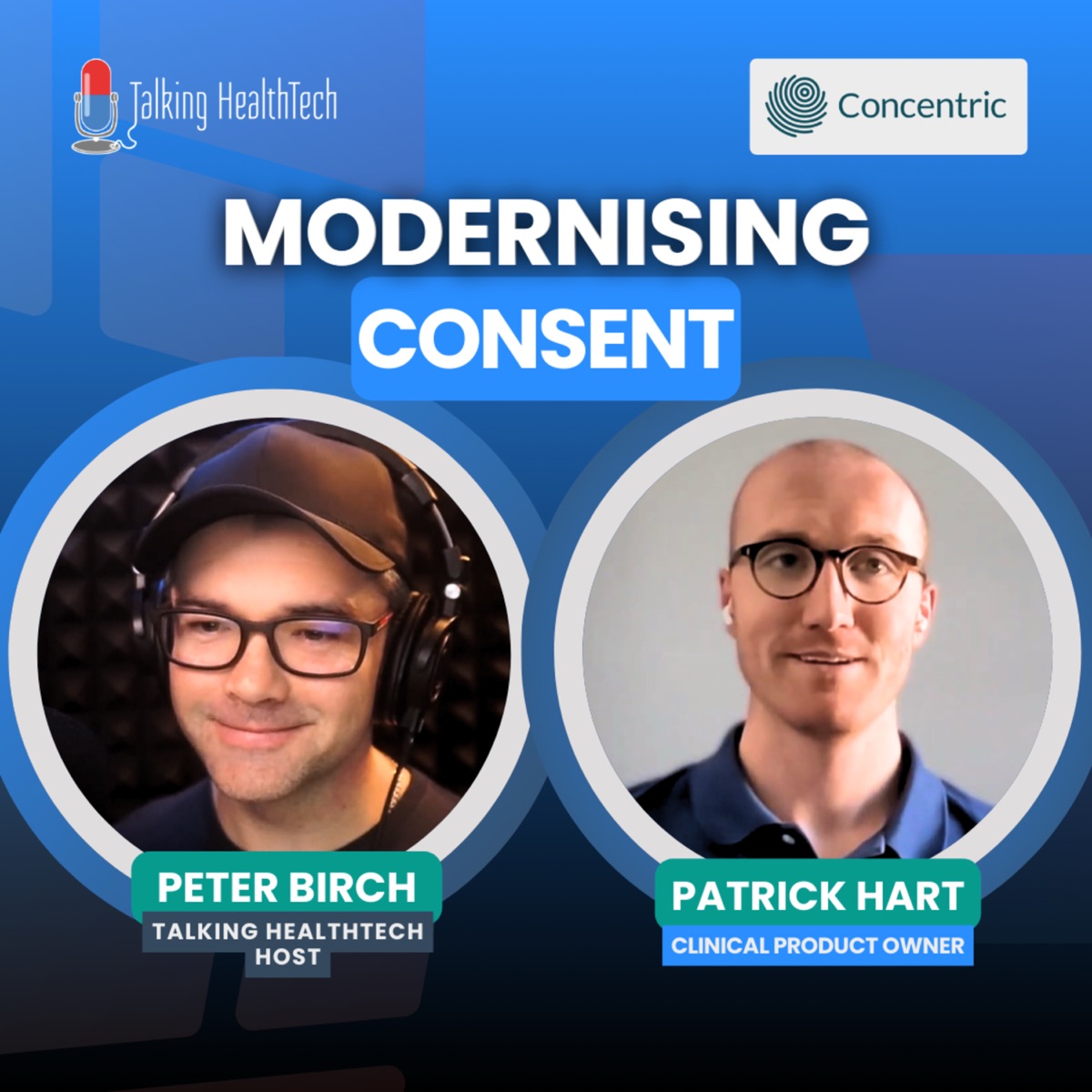
Those activities did not produce one neat, attributable outcome. Their value accumulated in much the same way as physical presence did: people became familiar with us, we understood the ecosystem better, and conversations began from a position of contribution rather than a cold introduction.
For a UK healthtech company considering Australia, I would find the relevant local programmes and communities early. Go in ready to learn, but also think honestly and creatively about what your own experience allows you to contribute. The aim should be to become a useful part of the community, not simply to find new places to promote the product.
Bringing the whole company along. A market entry like this can easily become one person’s project, with the relationships, context and learning living in their head. We set out to avoid that from the start.
I shared what I was learning with the wider team as we went, but written updates and video calls only take you so far. The people making decisions about the product, operations and company strategy also need to develop their own feel for the market.
Daf was the first of our founders to spend time with me in Australia, joining a couple of weeks of hospital visits, meetings and conversations across the ecosystem. He came away with a much richer understanding than I could have given him through reports alone, and recorded a short reflection at the end of the trip:
That cannot be a one-off exercise. As our understanding deepens and the questions we need to answer change, different people from across Concentric will need to spend time in the market themselves.
The practical lesson is that local knowledge needs to travel in both directions. The person on the ground has to stay connected to the company, but the rest of the company also has to get close enough to the market to make better decisions about it.
Where we are now
When you are building a new market, the question sitting behind everything is whether it is going to work. Are the early signs strong enough to justify continuing, or would the company be better focusing its time and resources somewhere else?
The absolute position in any one month does not answer that question particularly well. Early on, the numbers will almost always be small. What I have learned to pay closer attention to is the relative momentum from month to month: whether we are having more useful conversations, whether introductions are coming more readily, whether opportunities are progressing further, and whether each local example is making the next one easier. On those measures, the direction in Australia is increasingly encouraging.
We have good evidence that the product works in this market. Individual surgeons and small clinics are using it successfully, we are building momentum with public hospitals, and the early feedback is familiar: patients feel more informed and in control, while clinicians have greater confidence in the consistency of their consent process.
The next challenge is making sure the company can support that momentum well. As we build a growth and operations presence in Australia, while product and technical colleagues remain in the UK, there are still important questions to work through. How do we keep local market knowledge close to the people shaping the product? How do we make decisions quickly across time zones? How do we maintain the feeling of one cohesive team, rather than creating an Australian team and a UK team that happen to work for the same company?
We do not have all of those answers yet, and I do not think we should pretend otherwise. The operating model will need to evolve as the team grows and as the nature of the work changes. At this stage, the encouraging thing is not that everything is solved, but that the momentum is strengthening enough to make solving those questions necessary.
Closing thoughts, and a place to start
Do not treat Australia as simply a sunnier version of the UK. It is familiar enough that you can make sense of it, but different enough that assumptions will catch you out. Commit the time to understand those differences, build the right local relationships and shape an operating model that works for the market.
The most useful first step is simply to spend time in the ecosystem. If you are not yet ready to put someone on the ground, plan a visit around one of the two main gatherings of the Australian digital health community: Digital Health Festival in Melbourne or HIC in Sydney.
Digital Health Festival is the closest Australian equivalent to Rewired: a broad gathering of the digital health community, with a strong mix of technology, innovation and practical delivery. HIC feels closer to NHS ConfedExpo, bringing together senior health system leaders, clinicians, policymakers and industry around the wider direction of healthcare.
Neither will give you a complete view of Australia, but together they are an efficient way to start understanding the language, priorities, organisations and people shaping the market.
The broader lesson is that evidence, and an established presence in the UK, can earn you an initial conversation, but they cannot establish a market on their own. That still takes time on the ground, local advocates and the steady accumulation of trust.
We went to Australia because the problem is real, and we are continuing to invest because the momentum is moving in the right direction. For Concentric, the next stage is about turning that momentum into something durable: building trust clinician by clinician and organisation by organisation, while working out how to operate as one company across two markets.
Thank yous
I am especially grateful to the people who welcomed a UK doctor turning up in their market, shared their time and knowledge, and helped me find my feet. Particular thanks to Sophie Turner, the team at ASME, Dr Anu Ganugapati, Keith Joe and Peter Birch, among many others.
When you are operating a long way from the rest of your team, and even a quick call can take effort to arrange across time zones, relationships like these make an outsized difference. I am very grateful for the advice, introductions, encouragement and friendship.